Proezi Makes Business Directions, Payments, and Company Information Easier to Share
Introduction
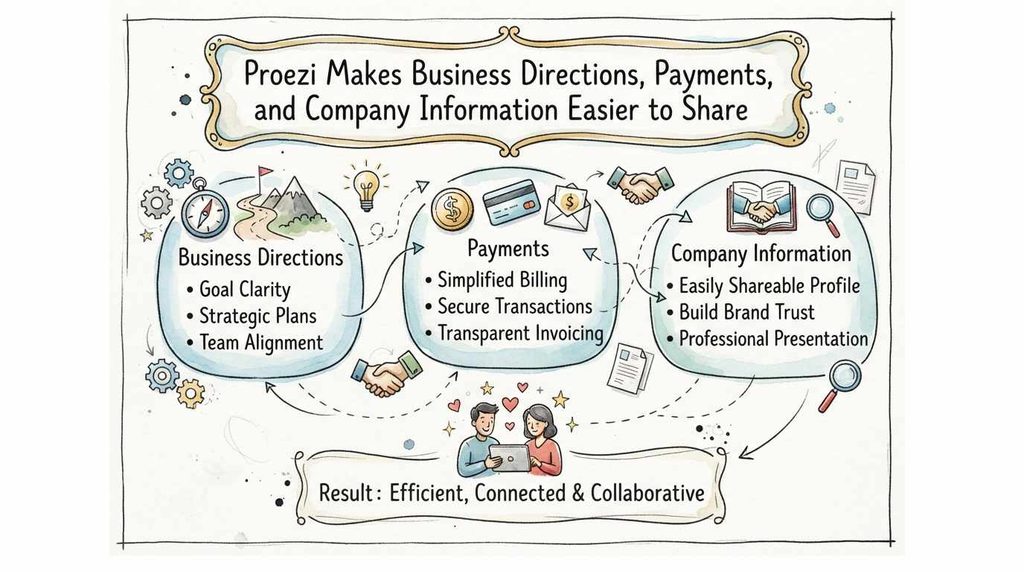
A customer should not have to ask three people to find one important business detail. Visitors need clear directions. Customers need the right payment information. Suppliers may need company registration details. Yet many businesses still share these answers through separate messages, old documents, and repeated phone calls. This creates extra work for staff and confusion for the people they serve. A better approach is to prepare useful information once and make it easy to access whenever someone needs it. Proezi supports this approach with shareable pages for visitor directions, payment details, and business identity information. Businesses can share these pages through links and QR codes. People can open them in a browser without installing an app or creating an account.
What Is Proezi?
Proezi is a web-based business information-sharing platform. It helps organizations prepare and publish information that people often request. These pages cover three main needs: finding a business location, accessing payment instructions, and viewing business identity details. Each page can be shared through a link or QR code. For example, a company can share arrival instructions with a visitor and payment details with a customer. It can also provide business registration information to a supplier. Proezi follows the idea of “Share anything with ease.” You can explore the platform at Proezi and see how it brings these everyday information needs into one place.
Why Businesses Need Better Digital Information Sharing
Business communication often involves the same questions every day. Visitors ask which entrance they should use. Customers request bank details before making a transfer. Suppliers need company registration numbers for their records. Staff may answer these questions through email, phone calls, messaging apps, or printed documents. This can create confusion when different people share different versions. A dedicated information page gives the team a reusable answer. People can access the details when they need them. Staff can also focus on other work instead of repeatedly typing the same instructions. Clear information makes routine communication easier to manage.
QR Code Directions for Visitors: Help People Find the Right Entrance
A business address does not always explain how to reach the correct door. Large offices, hospitals, hotels, factories, and campuses may have several entrances. Visitors may also need to know where to park or which reception desk to visit. QR code directions for visitors can make these final steps easier to understand. A business connects a QR code to a page with practical arrival instructions. Visitors scan the code and open the directions on their phones. The page can explain the parking area, entrance gate, walking route, reception point, and floor number. Businesses can share the code through appointment messages, invitations, websites, and printed signs.
Understanding Visitor Wayfinding Software
Visitor wayfinding software helps people move from a general location to the place they actually need to reach. Some visitors need outdoor directions. Others need help finding a building, department, floor, or reception desk. The right information depends on the site. A small office may only need parking and entrance instructions. A large hospital may need separate directions for different departments. An event venue may need routes for guests, exhibitors, and suppliers. Proezi supports this process through shareable arrival pages. Businesses can explain routes, landmarks, gates, parking, and indoor steps in one place. Visitors can read the information without installing separate software.
Digital Visitor Arrival Instructions: Explain Every Important Step
Digital visitor arrival instructions should guide people through the complete arrival process. A street address alone may not answer the questions that arise near the destination. Visitors may need to know which road to take, where to park, and which entrance to use. They may also need to find a particular floor or room. A useful page explains these steps in the order people will follow them. Businesses can add photos, coordinates, landmarks, route details, and contact options. A clinic, for example, can explain the parking entrance and the location of its reception desk. A warehouse can direct delivery drivers to the correct loading gate.
How to Find Us Page for Business: Details Visitors Actually Need
A how to find us page for business should do more than display an address. It should help a first-time visitor understand the final part of the journey. Include the correct building name, parking area, entrance, and reception location. Add nearby landmarks when they help people recognize the site. Photos can make a gate or doorway easier to identify. If the business has more than one entrance, explain which one visitors should use. You can also mention access arrangements, floor numbers, and a contact option. These details help visitors prepare before they leave and reduce basic direction-related calls.
Event Venue Directions QR Code: Make Event Arrivals Easier
Event organizers often manage many arrivals within a short period. Guests may reach the venue by car, taxi, public transport, or on foot. Some may need to find a registration desk, while others need a specific hall or entrance. An event venue directions QR code can bring these details together. Organizers can share it in ticket messages, invitations, event emails, and printed notices. The linked page can explain the venue address, parking arrangements, entry gate, registration point, and nearby landmarks. Guests can review the instructions before travelling. This helps them understand where to go instead of searching for directions after reaching the area.
Parking and Entrance Directions for Visitors
Parking arrangements can create confusion when a property has several vehicle and pedestrian entrances. A business may have separate spaces for visitors, staff, deliveries, and accessible parking. Visitors need to know which area they should use. Parking and entrance directions for visitors should clearly identify the right parking point and the route from there to the building. Explain whether people should use a particular gate or report to reception first. Photos of signs, gates, and entrances can make the instructions clearer. These details are useful for offices, clinics, hotels, event venues, and industrial properties.
Last Mile Navigation for Businesses: Solve the Final-Destination Problem
Last mile navigation for businesses focuses on the final part of a journey. A visitor may reach the correct street but still struggle to find the right building or entrance. This often happens at large campuses, hospitals, business parks, factories, and hotels. Navigation apps can guide people toward a general address. However, they may not explain private roads, internal gates, parking areas, or reception points. A dedicated arrival page can provide these missing details. Visitors can use Google Maps, Apple Maps, or Waze for the outdoor journey. They can then follow the business’s instructions to reach the exact destination.
How QR Codes Make Visitor Communication More Practical
QR codes connect physical signs and messages with digital information. Businesses can place them on reception notices, parking signs, appointment cards, event tickets, and delivery instructions. Visitors scan the code and open the linked page in a browser. They do not need to search through old conversations or type a long address. Businesses can also reuse a printed QR code when the page behind it remains available and the information gets updated. This can reduce the need to replace signs whenever an instruction changes. It also gives visitors one simple way to access the latest published directions.
How to Share Bank Details with Customers Securely
Customers need correct payment details when they pay invoices, deposits, or service charges. Businesses should use a careful process to prepare and share this information. When considering how to share bank details with customers securely, start by confirming the account information with the responsible finance team. A payment page can organize the account holder’s name, bank details, and payment reference instructions. Businesses should explain which reference customers need to include. They should also encourage customers to check the account name and details before confirming a transfer. Proezi helps businesses publish payment information, but it does not collect, process, or transfer money. Customers use their own banking applications to complete payments.
UPI QR Code Payment Page: Present Payment Instructions Clearly
A UPI QR code payment page gives customers a clear place to find supported UPI information and payment instructions. Businesses can share the page through a link or printed QR code. Customers open it and use their own UPI application to make a payment. The page can also explain which invoice number or reference the customer should include. Businesses must check the displayed payment information before sharing it. They should update the page when their payment details change. Proezi provides a way to share these details, but it does not complete transactions or confirm payment success.
Share Business Registration Details Online
Businesses often need to provide identity information to customers, suppliers, and other partners. This may include a registered business name, company number, tax identifier, or other supported registration detail. Organizations can share business registration details online through a dedicated identity page. This gives recipients a clear place to review the information provided by the business. Supported identifiers can undergo format and checksum validation. However, a format check does not prove ownership or confirm current registration with a government authority. Anyone who needs official confirmation should check the relevant public registry or government source.
Why Businesses Need Separate Visitor, Payment, and Identity Pages
Visitor directions, payment details, and company identity information answer different questions. Combining them on one long page may make it harder for people to find what they need. Separate pages keep each purpose clear. A visitor can open directions without reading payment instructions. A customer can find bank details without searching through arrival information. A supplier can review company details without unrelated content. This separation also makes updates easier to manage. A business can change its parking instructions without changing its payment information. It can review identity details separately when company records change.
| Page Type | Main Purpose | Typical Information | Intended Audience |
|---|---|---|---|
| Visitor directions page | Help people reach a location | Parking, entrances, gates, reception, floors | Visitors and delivery partners |
| Payment details page | Share payment instructions | Bank details, UPI information, payment references | Customers and suppliers |
| Business identity page | Share company information | Registered name, registration numbers, tax identifiers | Customers and business partners |
How Proezi Helps Offices, Clinics, Hotels, and Event Venues
Different organizations can use digital information pages for different situations. An office can guide interview candidates to the correct reception desk. A clinic can explain its parking area, entrance, and department location. A hotel can share arrival instructions with guests. An event organizer can provide directions to registration desks and halls. A warehouse can guide delivery drivers to the correct loading point. These examples show why clear information matters across many business types. Proezi gives organizations a way to prepare and share the relevant details through browser-based pages, links, and QR codes.
How to Create Better Digital Arrival Instructions
Start by walking the route that a first-time visitor would take. Check the approach road, parking area, entrance, and final destination. Notice where someone might take a wrong turn or need help. Write each instruction in the order the visitor will experience it. Use short sentences and familiar names for buildings, gates, and rooms. Add photos or landmarks when they make a location easier to recognize. Include a contact option for visitors who need assistance. Before sharing the page, ask someone unfamiliar with the site to follow the directions. Their feedback can help you find missing steps.
Multilingual and Accessible Visitor Directions
Businesses may welcome visitors who speak different languages or need accessible routes. Directions should use simple words and explain each step clearly. Organizations can prepare instructions in suitable languages for their visitors. They should also explain step-free routes, accessible parking, lifts, and other available facilities. Photos and recognizable landmarks can help people understand the route. Some visitors may also lose mobile connectivity inside basements, lifts, or parking areas. Proezi supports multilingual information and previously cached offline directions. This can help visitors access instructions in places where a live connection is not available.
How to Keep Shared Business Information Accurate
A shared page is useful only when its information remains correct. Parking arrangements may change. A building may move its reception desk. A company may update its payment account or registration details. Businesses should assign responsibility for reviewing each page. They should check arrival instructions after building changes and before major events. Finance teams should confirm payment details whenever an account changes. Admin teams should review identity information when company records change. Staff should also test shared links and QR codes after updates. Regular reviews help prevent visitors and customers from relying on outdated details.
A Practical Digital Information-Sharing Checklist for Businesses
Before sharing a page, make sure it answers the reader’s main question. Use this checklist to review the information:
- Give each page one clear purpose.
- Confirm business names and location details.
- Check parking and entrance instructions.
- Add useful photos or landmarks where needed.
- Review payment details with the finance team.
- Explain required payment references.
- Check registration and tax identifiers.
- Open each page on a mobile phone.
- Test every shared link and QR code.
- Review the information whenever something changes.
AEO, GEO, LLMO, AISEO, and E-E-A-T for Business Information Content
People now discover businesses through search engines, maps, direct links, and AI-powered tools. Clear and accurate information helps people understand what an organization does. AEO focuses on answering questions directly. GEO considers how content appears in generative search experiences. LLMO focuses on how large language models understand and use information. AISEO connects AI-related search practices with wider SEO work. E-E-A-T focuses on experience, expertise, authoritativeness, and trustworthiness. Businesses can support these goals with accurate details, useful headings, clear explanations, and consistent company information. They should avoid unsupported claims and review content whenever important details change.
Why Proezi Is Worth Exploring
Businesses do not need to repeat every answer through separate messages. They can prepare clear information pages and share them whenever someone needs the details. Proezi supports this approach with pages for visitor arrival instructions, payment information, and business identity details. Links and QR codes make the pages easy to share across websites, invitations, messages, and printed signs. People can open the information in a browser without creating an account or installing an app. Businesses can begin with one repeated question and create a page that answers it. This small change can make everyday communication easier for staff, visitors, and customers.
Frequently Asked Questions
1. What is Proezi used for?
Proezi helps businesses share visitor directions, payment information, and business identity details. Organizations can publish pages and distribute them through links and QR codes.
2. How do QR code directions for visitors work?
A business connects a QR code to a digital arrival page. Visitors scan the code and open instructions about parking, entrances, gates, reception, or other important steps.
3. What does visitor wayfinding software do?
Visitor wayfinding software helps people reach a location and find the correct place inside it. It can provide directions, landmarks, parking details, entrance guidance, and floor information.
4. What should a how to find us page for business include?
It should include the business address, correct entrance, parking guidance, nearby landmarks, and reception instructions. Photos and contact details can make the page more useful.
5. How does an event venue directions QR code help guests?
It gives guests quick access to venue arrival information. Organizers can share parking details, entry gates, registration points, and directions through invitations, tickets, or signs.
6. How can businesses share bank details with customers securely?
Businesses should confirm account details before sharing them through a trusted channel. A dedicated payment page can organize bank information and payment references. Customers should check the details before making a transfer.
7. What is a UPI QR code payment page?
It is a page that presents UPI information and payment instructions. Customers open the page and use their own UPI application to complete the payment.
8. Can businesses share registration details online through Proezi?
Yes. Businesses can publish supported registration and tax identifiers on an identity page. Format and checksum checks do not independently confirm ownership or government registration status.
9. Do visitors need an app or account to open Proezi pages?
No. People can open shared pages in a web browser. They do not need to install an app or create an account to view the information.
10. Does Proezi process customer payments?
No. Proezi helps businesses share payment information and instructions. Customers complete transactions through their own banking or payment applications.
Final Thoughts
Good information helps people make decisions and complete everyday tasks. Visitors need to reach the correct entrance. Customers need clear payment instructions. Suppliers may need company identity details before they work with a business. Organizations can make these interactions easier by preparing information once and sharing it through suitable channels. Proezi brings these needs together through separate, shareable pages. Businesses can start with the questions their teams answer most often. They can then create clear instructions, check the details, and share the relevant page with the right people.
Leave a Reply