Your Guide to Finding and Booking Events Throughout the USA
Introduction
Planning something exciting starts with finding the right event. You might want a concert, a family festival, a professional meetup, or a weekend class. Across the United States, people can explore countless activities throughout the year. Each city offers different ways to enjoy free time, learn new skills, and meet others.
However, finding a suitable event requires more than a quick online search. You need reliable information about dates, venues, ticket prices, and registration. Online event platforms help bring these details together. They also give organizers a way to reach potential attendees. myeventsnow.us/ helps people discover event opportunities and explore activities across the USA.
Start With the Experience You Want
Before searching for events, think about the kind of experience you enjoy. This simple step can make your search more focused.
Some people prefer entertainment and social activities. Others look for professional learning or family-friendly outings.
Here are several event types worth exploring.
Live Music and Concerts
Concerts bring artists and audiences together through live performances. You can find pop, rock, jazz, country, electronic, and classical music events.
Large festivals often feature several performers across different stages. Local venues may host smaller shows and independent artists.
Check the performance schedule and venue before buying tickets. Also, review entry rules and age restrictions.
Food Events and Local Festivals
Food festivals offer a chance to explore regional dishes and new flavors. Many events feature local restaurants, food vendors, cooking sessions, and live entertainment.
Cultural festivals add music, art, dance, and traditional activities. These gatherings help visitors experience the character of a community.
Professional Conferences and Networking
Business conferences bring professionals together to exchange ideas. Popular subjects include technology, finance, healthcare, marketing, education, and management.
Many conferences include expert presentations and networking sessions. Some also offer practical workshops and panel discussions.
Read the agenda before selecting a ticket. This helps you choose sessions that support your goals.
Workshops and Skill Development
Workshops focus on learning through practical activities. Common topics include coding, photography, cooking, writing, design, and business skills.
Some sessions suit beginners. Others require previous experience. Review the course level and session details before registering.
Sports and Community Activities
Sports events attract both participants and spectators. You can explore local matches, tournaments, running events, cycling races, and fitness gatherings.
Community events may include charity walks, outdoor activities, neighborhood celebrations, and public programs.
Use Location and Date Filters to Narrow Your Search
A useful event search should match your location and schedule. Searching without clear details can produce too many unrelated results.
Start with these basic filters:
- Location: Choose a city, state, or nearby area.
- Event category: Select music, business, sports, food, or education.
- Date: Look for events that fit your calendar.
- Budget: Set a spending limit before comparing tickets.
- Audience: Check whether the event suits children, adults, families, or professionals.
- Travel distance: Consider transport, parking, and journey time.
These filters help you focus on relevant activities. You can then compare the most suitable listings.
Explore Event Opportunities in Different US Cities
American cities host a wide range of public and professional events. Your interests can help determine which destinations deserve attention.
| City | Event Experiences to Explore |
|---|---|
| New York City | Broadway performances, concerts, exhibitions, and conferences |
| Los Angeles | Film events, comedy shows, music festivals, and creative workshops |
| Chicago | Theatre, food festivals, sporting events, and live music |
| Miami | Art shows, cultural festivals, beach activities, and entertainment |
| Austin | Music events, technology meetups, and community gatherings |
| Boston | Educational conferences, workshops, and cultural programs |
| Seattle | Technology events, outdoor activities, and live performances |
| Nashville | Country music, concerts, and food celebrations |
| Las Vegas | Major shows, trade exhibitions, and business conventions |
| San Francisco | Startup events, professional meetups, and technology conferences |
Event schedules change throughout the year. Check current listings before planning travel or buying admission.
Search for Activities Near Your Area
You do not always need to travel far for an enjoyable experience. Local events can offer great ways to spend an evening or weekend.
Try combining a location with a specific activity. For example:
- Weekend concerts in Phoenix
- Family events in Orlando
- Food festivals in Chicago
- Art exhibitions in New York
- Business networking events in Seattle
- Photography workshops in Denver
- Outdoor fitness activities in Austin
Check the full venue address before booking. Also, consider traffic, parking, and public transport.
Book Event Tickets Online With Confidence
Online ticket booking helps people secure admission before an event. It also makes ticket comparisons easier.
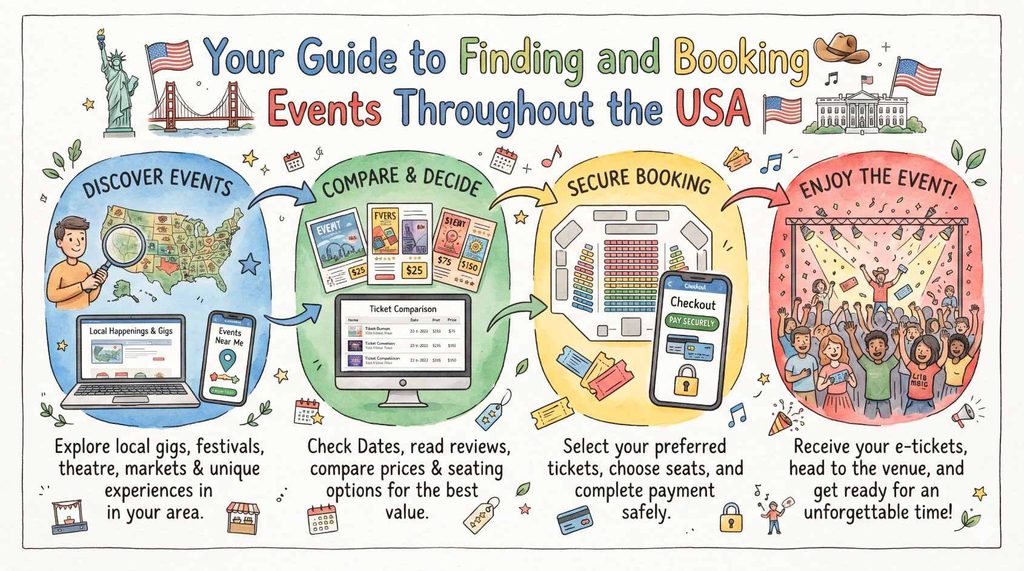
Use this process to complete your booking:
- Search for an event using its title, location, or category.
- Open the listing and read the full description.
- Confirm the event date and starting time.
- Check the venue and travel details.
- Compare available ticket categories.
- Review the final price and additional charges.
- Read refund and cancellation conditions.
- Enter the required booking information.
- Complete the payment process.
- Save your ticket and confirmation message.
Keep your booking details available on your phone or another device. Some venues ask visitors to show a digital ticket at entry.
Compare Admission Types Before Making a Purchase
Event organizers may offer several ticket categories. Each option can include different benefits and conditions.
| Ticket Option | Typical Features | Suitable Audience |
|---|---|---|
| General Admission | Standard access to the event | Regular visitors |
| VIP Ticket | Premium access or additional benefits | Guests seeking extra comfort |
| Early Bird Ticket | Discounted price during an early sales period | People booking in advance |
| Group Ticket | Admission for multiple guests | Friends, families, and teams |
| Student Ticket | Reduced price for eligible students | Qualified students |
| Workshop Pass | Entry to selected learning sessions | Workshop attendees |
Do not choose a ticket based on price alone. Check its benefits and restrictions first.
What Should a Good Ticketing Platform Offer?
An online ticketing platform helps organizers manage ticket sales. It also gives attendees a way to review event information and purchase admission.
Look for these useful features:
- Easy event search
- Clear event descriptions
- Multiple ticket categories
- Transparent pricing
- Secure payment options
- Booking confirmations
- Ticket availability updates
- Attendee information management
- Mobile-friendly pages
- Accessible customer support
Organizers should review transaction fees and payment schedules. These details can affect their overall budget.
Manage Attendees With Event Registration Software
Event registration software helps teams collect and organize attendee information. It can reduce repetitive tasks and improve guest management.
A conference may need company names and session preferences. A workshop may need participant contact details and experience levels.
Common registration features include:
- Custom registration forms
- Attendee databases
- Automated confirmation emails
- Registration limits
- Guest categories
- Check-in support
- Attendee list exports
- Registration reports
Keep forms simple and ask only for necessary details. A shorter process can help visitors complete registration without confusion.
Create Event Listings That Attract the Right Audience
An online event listing should answer the questions visitors ask before booking. It should explain what happens, where it takes place, and how people can attend.
Organizers can follow this practical checklist.
Choose a useful title: Explain the main event activity in a few words.
Write a clear introduction: Tell visitors what makes the event worth attending.
Add the full schedule: Include dates, starting times, and session details.
Confirm the venue: Provide an accurate address and location information.
Select suitable categories: Help visitors discover the listing through relevant topics.
Explain ticket options: Show prices, benefits, and admission rules.
Add registration instructions: Explain how visitors can reserve their place.
Share contact details: Give people a way to ask questions.
Review the final page: Check dates, spelling, prices, and other important information.
Accurate listings help visitors make informed decisions. They also reduce repeated questions for organizers.
Build a Stronger Online Ticket Sales Process
Selling tickets online requires clear information and a smooth checkout process. Organizers should make each step easy to understand.
Consider these practical methods:
Offer Clear Ticket Choices
Explain what each ticket includes. If you offer VIP or group admission, describe the added benefits.
Display the Complete Price
Show service charges and other fees before checkout. Visitors should understand the final cost.
Share Event Information With Relevant Audiences
Use email, social media, local communities, and professional networks. Choose channels that reach people interested in the event.
Set Clear Booking Periods
Mention when ticket sales open and close. Early booking offers can encourage advance purchases.
Keep Attendees Informed
Send booking confirmations and useful updates. Tell guests about changes to the schedule, venue, or entry process.
Review Sales and Registration Data
Track ticket activity during the campaign. Use the information to understand demand and plan future events.
Organize Event Activities With Management Software
Event planning includes several connected tasks. Organizers must coordinate schedules, speakers, staff, guests, and venues.
Event management software can help teams handle these responsibilities.
| Management Area | Useful Software Support |
|---|---|
| Event Scheduling | Arrange dates, sessions, and activities |
| Venue Planning | Store location and venue information |
| Speaker Coordination | Manage speaker profiles and schedules |
| Attendee Records | Organize registration information |
| Ticket Sales | Review ticket categories and purchases |
| Guest Communication | Share updates and reminders |
| Staff Duties | Assign tasks to team members |
| Check-In | Track guest arrivals |
| Reporting | Review attendance and sales results |
A small community event may need basic planning tools. A large conference may require more advanced features.
Choose software that supports your actual workflow. Avoid unnecessary features that add cost without clear value.
How MyEventsNow USA Connects Organizers and Attendees
People want an easier way to discover activities that match their interests. Organizers want to share event information with people who may attend.
MyEventsNow USA supports this connection through online event discovery. Visitors can explore event opportunities and review useful details before making plans. Organizers can present their activities to audiences searching for new experiences.
A complete event listing should explain:
- The event’s main purpose
- Its date and starting time
- The venue and location
- The expected audience
- Available ticket options
- Registration or booking instructions
Clear information helps visitors compare choices. It also helps organizers communicate the event’s value.
Four Examples of Online Event Planning
Different people search for events with different goals. These examples show how online listings can support their plans.
A Family Looking for Activities in Orlando
A family wants to plan a weekend outing. They search for family festivals, outdoor programs, and live entertainment.
They compare event locations and ticket prices. Then they select an activity that suits every family member.
A Professional Exploring Conferences in San Francisco
A technology professional wants to learn about new industry developments. They search for conferences and networking events.
They review speaker details, session topics, and registration fees. After comparing options, they choose a suitable conference.
A Restaurant Organizing a Food Festival
A restaurant plans a local food festival. The team wants to attract visitors and manage advance registrations.
They prepare a detailed event listing with food highlights, venue information, and ticket options. They also share the listing with local audiences.
A Student Searching for a Creative Class
A student wants to learn graphic design. They search for beginner workshops in their city.
They compare course details, session times, and prices. They choose a class that fits their schedule and learning needs.
Choose an Event Platform That Matches Your Needs
The right platform should support your main goals. Attendees need convenient search and booking. Organizers need practical publishing and management features.
Compare these areas before selecting a service.
| Comparison Point | What to Review |
|---|---|
| Search and Discovery | Location, date, and category filters |
| Event Publishing | Listing tools and description options |
| Ticket Booking | Ticket types and checkout process |
| Registration | Forms and attendee records |
| Payment | Available methods and transaction charges |
| Communication | Email updates and booking messages |
| Reporting | Ticket sales and registration data |
| Mobile Access | Page performance on smartphones |
| Customer Support | Help options and response channels |
Also, consider your event size and expected audience. A simple platform may suit a small workshop, while a large festival may need more advanced tools.
Avoid These Common Event Booking Problems
Careful planning can prevent mistakes before they affect your experience.
- Wrong event date: Confirm the complete date before payment.
- Incorrect venue: Check the address and travel route.
- Unclear ticket benefits: Read the description of each ticket type.
- Unexpected charges: Review the final checkout amount.
- Missed refund rules: Understand cancellation conditions.
- Late booking: Popular events may have limited availability.
- Incorrect attendee details: Review names and contact information.
- Lost confirmation: Save your ticket and booking message.
- Ignored event updates: Check organizer messages before travelling.
- Unclear accessibility details: Ask about facilities when necessary.
- Poor event research: Compare descriptions and schedules.
- Unsuitable platform choice: Review features before committing.
A careful review takes little time. It can make the event experience much smoother.
Frequently Asked Questions
1. How can I discover upcoming events in the USA?
Start with an online event platform or a local event calendar. Search by city, category, and preferred date. Explore concerts, festivals, workshops, conferences, and community activities. Read each listing carefully and compare its location, schedule, ticket price, and entry conditions before booking.
2. What is the easiest way to find events near me?
Use your city, neighborhood, or ZIP code as the search location. Add an activity such as music, sports, food, or education. Review the venue address and travel distance. This approach can help you find suitable local activities without sorting through unrelated listings.
3. Can I purchase event tickets through an online platform?
Yes. Many platforms allow visitors to select tickets and complete payments online. Review the event information and admission options first. Check the final price and booking conditions before payment. Save the confirmation message so you can access your ticket when you arrive.
4. Which event categories are popular across the USA?
Popular categories include live music, food festivals, cultural celebrations, sports competitions, business conferences, and educational workshops. People also attend comedy shows, theatre performances, art exhibitions, and community programs. The available options depend on the city, season, and local event schedule.
5. What does an event ticketing platform do?
An event ticketing platform helps organizers list events and sell admission online. Visitors can review event details, compare ticket categories, and make bookings. Organizers can monitor sales and manage booking records. Some services also include registration, communication, and reporting features.
6. Why do organizers use event registration software?
Registration software helps teams collect attendee details and manage guest information. It can support online forms, confirmation emails, guest lists, and check-in activities. These tools reduce manual work and improve organization. Event teams should choose features that suit their event size and registration needs.
7. How do I publish an event online?
Prepare a clear title and description. Add the event date, time, venue, category, and ticket information. Explain how visitors can register or purchase admission. Review the listing before publishing. Accurate information helps people understand the event and decide whether they want to attend.
8. Can small businesses promote events online?
Yes. Small businesses can promote workshops, product launches, networking sessions, and community activities. A detailed listing can explain the event’s value and attract relevant visitors. Organizers can also use registration tools to collect attendee information and prepare for the event.
9. What information should I check before booking tickets?
Confirm the date, time, venue, ticket type, and final price. Read the event description and check age restrictions. Review refund and cancellation rules. If accessibility matters, check available facilities. Keep your confirmation details after payment so you can access your booking easily.
10. How are ticketing and event management software different?
Ticketing software mainly handles ticket sales and booking activities. Event management software supports a wider planning process. It may include scheduling, attendee management, staff coordination, communication, and reporting. Some platforms combine both functions, while others provide separate services.
11. What can organizers do to increase online ticket sales?
Organizers can improve their event listings and explain the benefits of attending. They should offer clear ticket options and display complete prices. Sharing the event with relevant audiences can also increase awareness. Early booking offers and regular updates may encourage more people to register.
12. What should I consider when choosing an event platform?
Compare search features, event publishing, ticket sales, registration, payment options, and customer support. Organizers should also review transaction fees and reporting tools. Attendees should focus on clear event details and convenient booking. Select a service that meets your needs without unnecessary costs.
Make Every Event Plan More Meaningful
A good event can create lasting memories, teach useful skills, or build valuable connections. Start by choosing an activity that matches your interests and schedule. Compare event details, locations, and ticket options before making a decision.
Organizers can create a better experience through accurate listings and simple registration. Attendees benefit when they receive clear information at every step. Online discovery platforms help bring these groups together. Explore MyEventsNow USA to find activities and make plans for your next experience.
Leave a Reply