AI News Aggregator: A Simple Way to Discover, Compare, and Understand the News
Introduction
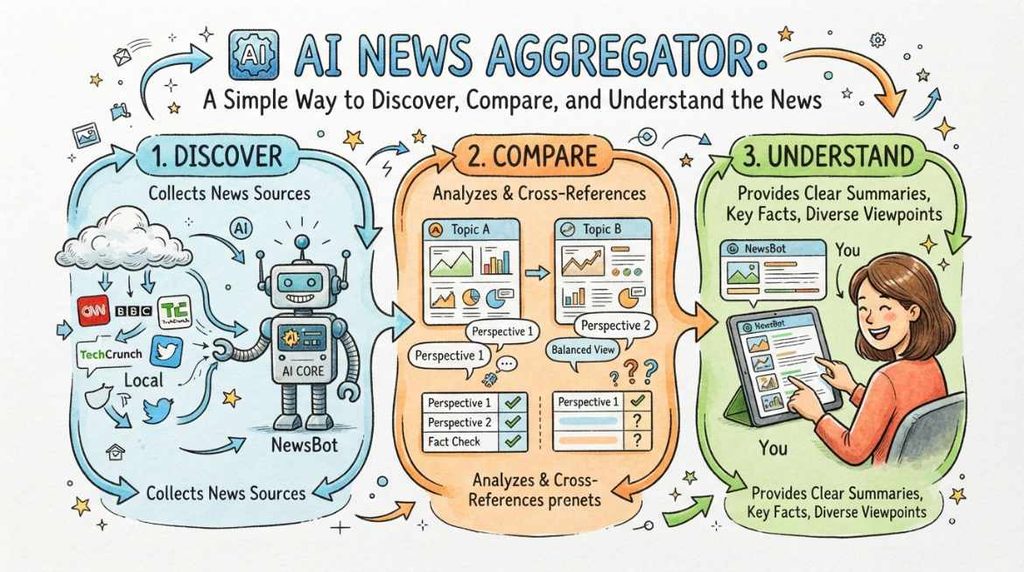
Every day, new stories appear across hundreds of news websites. Some cover local events, while others report global changes. Many publishers also share updates about the same event. Finding useful information can take time. Readers may also struggle to separate facts from opinions. An AI News Aggregator can make this process easier. It collects headlines and organizes related reports in one place. AI tools can also create short summaries and help readers explore major topics. HeadlineSift aims to support this process through organized news discovery, concise summaries, and links to original reports.
Why Do Readers Need Better News Discovery?
Online news gives readers many choices, but too many choices can create confusion. People often switch between websites to follow one event. They may also read similar reports several times. This wastes time without always adding useful information. A well-organized news platform can reduce this effort. It can group related reports and help readers find stories by topic or region. Readers can then decide which articles deserve a closer look. Still, a neat news feed does not guarantee complete or accurate information. Readers need to check sources and compare important claims.
Understanding the Role of an AI News Aggregator
An AI News Aggregator gathers news from multiple publishers. It then organizes reports so readers can explore related stories more easily. AI may help identify similar topics, group coverage, and highlight stories that seem important. For example, several websites may report on one new government policy. An aggregator can help readers find those reports together. This approach can make research more convenient. However, an aggregator does not automatically confirm every claim. The quality of its results depends on available sources, content, and selection methods. Readers should always review the original reporting.
How AI Turns Long Reports Into Short Summaries
An AI News Summarizer creates a shorter version of a news report. It looks for important details and tries to explain the main event. A useful summary may include key people, dates, figures, and possible effects. This gives readers a quick starting point. It can also help them decide which stories need more attention. But a short version cannot always preserve every detail. AI may misunderstand a statement or leave out useful background. Readers should open the full report when they need exact facts, technical details, or important context.
Finding Useful Stories Through Curated News Headlines
Curated News Headlines help readers scan reports without browsing many websites. A news platform may organize stories by subject, region, freshness, and relevance. This makes it easier to find reports about topics that matter. Good curation should also show the publisher and publication date. Readers need these details to judge a story’s value. A strong selection process should include different viewpoints when available. It should not hide important reports simply because they challenge a popular view. Readers should also explore stories outside their usual interests.
Following Developing Events With a Breaking News Aggregator
A Breaking News Aggregator helps readers discover reports about events that are still unfolding. It can bring updates from several publishers into one reading space. This may help readers compare early reports with later information. However, early news often changes as reporters collect more facts. Some details may remain uncertain for hours or days. Publishers may also correct earlier reports. Readers should check the time, update notes, and original sources. Avoid sharing dramatic claims before reliable reports support them. A developing headline should never replace careful verification.
Looking Beyond Borders With a Global News Aggregator
International events can affect people far beyond the country where they begin. A Global News Aggregator helps readers follow developments across different regions. It may organize stories by country, topic, or location. Readers can compare reports from local and international publishers. Local sources may explain cultural or political details that outside reports miss. International sources may offer a wider view of the event. However, no single platform can cover every publisher or viewpoint. Readers should compare different reports and consider local context before forming an opinion.
Keeping Up With Technology and Digital Change
A Technology News Aggregator can help readers follow changes across the digital world. It brings useful topics together so readers can find reports that match their interests. Technology coverage may include:
- Artificial intelligence: New tools, models, research, and practical uses.
- Cybersecurity: Data risks, security updates, software flaws, and safety advice.
- Software: New products, updates, development tools, and digital services.
- Cloud computing: Cloud platforms, infrastructure, storage, and service changes.
- Gadgets: New devices, product launches, and consumer technology.
- Digital innovation: New ideas that may change work and daily life.
These topics can help professionals and students spot useful developments. But headlines alone cannot prove a technical claim. Readers should check official product notes, research papers, security notices, and technical documents before acting on important information.
Tracking Companies and Markets With Business News
A Business News Aggregator helps readers follow company activity and industry changes. It may collect reports about business deals, leadership changes, product launches, and economic developments. Business owners can use these stories to understand their markets. Professionals can follow changes across their industries. Entrepreneurs may also discover new challenges and opportunities. However, readers must separate confirmed announcements from predictions. A planned deal may not reach completion. An opinion about a company does not prove its future performance. Compare publishers and check official company statements before drawing conclusions.
Reading Financial News With Care
Financial News Headlines often cover stock markets, company results, economic policies, and investment announcements. These reports may include figures that need careful attention. A reader should check the date, currency, company name, and source. They should also understand the event behind a market change. A rise or fall in one share price does not explain a company’s full position. A news report also cannot predict future returns. Readers should use summaries to find useful stories, then review original reports and official financial documents. News content should not replace personal financial advice.
Making Sense of Events Through News Impact Analysis
News Impact Analysis looks beyond what happened. It explores why an event matters and who may feel its effects. A policy change, for example, may affect families, businesses, workers, and public services. A company announcement may affect customers, staff, suppliers, and competitors. AI-generated insights may help readers consider these connections. But readers must separate confirmed effects from possible outcomes. A possible impact is not a proven result. Good analysis needs reliable evidence and clear context. Readers should check original reports, official records, and expert information before accepting important conclusions.
Could a Personalized News Digest Improve Your Reading Routine?
A Personalized News Digest may organize news around selected topics, regions, or interests. It could help readers follow important subjects without scanning every category. A business owner may prefer industry updates. A student may focus on education and international events. A technology worker may follow software and cybersecurity. Personalization may reduce repeated reading, but it also has limits. Readers could miss important stories outside their usual interests. They may also see fewer opposing viewpoints. HeadlineSift describes personalized digest features as planned or developing. Check the platform for current availability before expecting this feature.
Simple Checks That Help You Read News Better
Readers can make better choices by following a few basic habits. These checks help reduce confusion and limit the spread of incorrect information.
- Do not trust a headline alone: Read the full article before judging the story.
- Check AI summaries: Compare important details with the original report.
- Verify breaking claims: Wait for reliable reporting before sharing major updates.
- Review publication dates: Look for newer reports, corrections, and update notes.
- Compare publishers: Read different reports instead of relying on one outlet.
- Separate facts from opinions: Check whether an article reports events or shares a viewpoint.
- Question predictions: Treat forecasts as possible outcomes, not confirmed facts.
- Open source links: Follow the original report to review its evidence.
- Look for missing context: Read more when a short summary leaves questions unanswered.
- Explore different topics: Follow new categories to avoid a narrow view of events.
These habits work with any news platform. They also help readers use AI tools more responsibly.
A Practical Checklist for Checking News Reports
Before sharing or acting on a story, review these important details. They can help you understand where the information came from and what it actually supports.
| Checkpoint | What to Review | Why It Matters |
|---|---|---|
| News publisher | Publisher name and article details | Shows who published the report |
| Date and time | First publication and latest update | Helps identify old or changing information |
| Original source | Full article, statement, or document | Provides details beyond the headline |
| Evidence | Data, records, quotes, and named sources | Helps readers assess important claims |
| Other reports | Coverage from different publishers | Adds viewpoints and useful context |
| Article type | News, opinion, analysis, or forecast | Helps separate facts from interpretation |
A single check cannot prove that every claim is correct. Use several checks together, especially for important topics.
How HeadlineSift Brings News Discovery Together
HeadlineSift aims to help readers explore reports from many publishers through one organized platform. Its news experience covers international, regional, technology, business, and financial topics. Readers can explore headlines, review source names, and follow links to original reports. The platform also aims to use AI to group related coverage and create concise story summaries. Its website displays different news filters and category options. Some stories may not yet have completed AI analysis. Readers should therefore check the details shown on each story. They should also open original reports when they need stronger evidence or more context. Personalized news digest capabilities remain planned or developing unless the platform confirms their release.
How Different Readers Can Use News Aggregation
A news platform can support different reading goals. The best approach depends on the reader’s work, interests, and need for detail.
| Reader Type | Useful News Categories | Recommended Verification Step |
|---|---|---|
| Business owner | Business, economy, and industry | Review company statements and official records |
| Technology professional | AI, cybersecurity, software, and cloud | Check technical notices and product documents |
| Investor | Financial news, markets, and company results | Read official filings and original reports |
| Student | National, global, science, and education | Compare reports and trusted references |
| Entrepreneur | Business, technology, and finance | Separate confirmed events from forecasts |
| General reader | Local, national, and international news | Check dates and compare publishers |
Readers should choose useful categories but avoid following only familiar subjects. A wider reading habit can reveal changes that may affect their lives or work.
Four Everyday Examples of Responsible News Reading
These fictional examples show how people can use news summaries and source links. They do not describe real events.
Example 1: A small business owner
Neha runs a local clothing store. She wants to follow changes in retail and business costs. She uses a Business News Aggregator to find related reports. Short summaries help her select stories for deeper reading. She then checks official company statements and full reports before changing her plans.
Example 2: A technology professional
Rahul works with cloud systems. He wants to follow software updates and cybersecurity reports. He scans headlines through a Technology News Aggregator. When he finds a possible security issue, he checks the original advisory and technical details. He does not make system changes based only on a short summary.
Example 3: A student following global events
Sara studies international relations. She follows reports from publishers in several countries. She compares dates, local explanations, and different viewpoints. This helps her understand the wider context. She also checks the original reports before using information in her studies.
Example 4: A reader following financial news
Aman wants to understand a company announcement. He reads a short summary first. Then he opens the company’s official statement and checks the figures. He also reviews the publication date. He uses the report to learn about the event, not to make an automatic investment decision.
Frequently Asked Questions
What is an AI news aggregator?
An AI news aggregator collects news from different publishers and organizes related reports. It may use artificial intelligence to group stories, identify topics, and highlight useful headlines. Readers can explore several reports in one place. However, the tool does not guarantee that every claim is correct. Always check the publisher, publication date, and original article before trusting important details.
How does an AI news summarizer work?
An AI news summarizer studies an article and creates a shorter version. It tries to keep the main event, important facts, and key details. This helps readers understand a report before reading the full article. However, AI may miss context or misunderstand information. Readers should check the original report when a story affects an important decision.
What are curated news headlines?
Curated news headlines are selected reports arranged in a useful order. A platform may group them by topic, location, relevance, or freshness. This helps readers scan stories more easily. Good curation should show source details and include different viewpoints when available. It should not hide important information or make one publisher’s opinion look like a complete account.
How can a breaking news aggregator help readers?
A breaking news aggregator collects reports about events that are still developing. It helps readers discover updates from different publishers and compare coverage. However, early reports may contain missing or incorrect details. Readers should check publication times, later corrections, and original sources. They should avoid sharing major claims until reliable reports support the information.
What is a global news aggregator?
A global news aggregator brings reports from publishers in different countries and regions. It helps readers follow international events and compare local perspectives. This can provide useful context about how an event affects different communities. However, no platform covers every source or viewpoint. Readers should consider language, local knowledge, and publisher background when reviewing international news.
How can a technology news aggregator help professionals?
A technology news aggregator organizes reports about AI, cybersecurity, software, cloud computing, and gadgets. It helps professionals find developments related to their work. Readers can use headlines to identify topics for deeper research. However, technical decisions need stronger evidence. Professionals should review official announcements, product documents, security notices, and research papers before relying on major claims.
What does a business news aggregator cover?
A business news aggregator covers company announcements, industry changes, economic developments, and market activity. It helps readers compare reports from different publishers. Business owners and professionals can use these updates to understand changes around their work. Readers should still separate confirmed announcements from forecasts, opinions, and rumours. Official company statements can help confirm important details.
What are financial news headlines?
Financial news headlines report events linked to markets, companies, and economic policy. They may cover stock prices, company results, interest rates, and investment announcements. Readers should check dates, figures, currencies, and original sources. A headline explains an event, but it cannot guarantee future performance. Readers should review full reports before making financial decisions.
What is news impact analysis?
News impact analysis explores why an event matters and who may experience its effects. It may consider people, businesses, industries, and public services. Good analysis separates confirmed results from possible outcomes and speculation. AI-generated insights can provide useful questions and context. However, readers should check original reports and reliable evidence before accepting important conclusions.
What is a personalized news digest?
A personalized news digest organizes reports around a reader’s interests, topics, or preferred regions. It may help readers follow useful updates with less repeated searching. However, it can also limit exposure to different viewpoints and unfamiliar subjects. Some platforms describe these features as planned or developing. Readers should check current product details before expecting access.
Why should readers check original news sources?
Original news sources provide the full report behind a headline or summary. They may include evidence, quotes, figures, and background details that a short version leaves out. Readers can also check the publisher and publication date. This matters when a story affects work, money, safety, or public decisions. Source links help readers make better judgments.
Can AI-generated news summaries contain mistakes?
Yes. AI-generated summaries can leave out important details, misunderstand statements, or repeat errors from source material. A short summary may also miss local history or wider context. Readers should treat it as a starting point rather than final proof. Open the original report and compare reliable coverage when a claim matters. This habit helps reduce mistakes.
Conclusion
An AI News Aggregator can make news discovery more organized. It brings reports together and helps readers explore different topics. Short summaries can also help readers decide what deserves attention. But good news reading needs more than quick headlines. Readers should check publishers, publication dates, source links, and wider context. They should compare reports before accepting important claims. HeadlineSift aims to bring headlines, AI-assisted summaries, and original source links together. This can support a more useful reading routine. Still, AI should guide readers toward better research, not replace original reporting or careful judgment.
Leave a Reply