Explore Local Experiences and Book Event Tickets Across the UK
Introduction
Every city has something interesting to offer. You might find a live concert, food festival, creative workshop, or business conference nearby. The challenge often starts with finding the right event. People may visit several websites to compare dates, venues, and ticket details. Online event platforms make this search more convenient. They help users explore different activities and review important information. They also give organisers another way to reach interested audiences. From London and Manchester to Glasgow and Belfast, the UK offers many experiences. This guide explains how to discover events, compare tickets, register online, and promote gatherings.
How Digital Platforms Are Changing Event Discovery
People now use online searches to plan many parts of daily life. Event discovery follows the same pattern.
Instead of relying only on posters or local notices, people can explore digital event listings. They can search by location, category, or personal interest.
This approach helps users find activities that match their plans. It also helps organisers introduce events to wider audiences.
Online platforms can support several activities:
- Event discovery across different locations
- Access to event descriptions and schedules
- Online ticket information
- Registration information for attendees
- Event promotion for organisers
- Connections between businesses, venues, and communities
The exact services depend on each platform. Users should always review the available features before choosing one.
Different Experiences You Can Find Across the UK
The UK event scene includes entertainment, education, culture, and professional activities. People can choose from many categories.
Live Music and Concert Experiences
Music events attract people with different tastes. Some enjoy large concerts, while others prefer smaller performances.
You can explore:
- Solo artist performances
- Live band shows
- Classical music concerts
- Tribute performances
- Music festivals
- Cultural music programmes
When searching for Concert Tickets UK, review the performer, venue, date, and ticket conditions.
Also, check the event schedule before arranging travel.
Festivals and Food Events
Festivals offer opportunities to enjoy food, music, art, and local culture.
Some focus on one theme, while others combine several activities.
Common festival categories include:
- Food and drink festivals
- Cultural celebrations
- Music festivals
- Arts and crafts events
- Local fairs
- Outdoor entertainment
These events can attract residents and visitors. Check the programme to understand what each festival includes.
Business Conferences and Networking
Professional gatherings help people exchange knowledge and build connections.
You may find:
- Industry conferences
- Business seminars
- Networking meetups
- Startup gatherings
- Leadership workshops
- Trade exhibitions
Before registering, review the event topics and intended audience. This helps you decide whether the event supports your professional goals.
Creative Workshops and Learning Sessions
Workshops give people practical ways to learn new skills.
Some focus on art and design. Others cover technology, cooking, business, or personal development.
Check the session description before booking. Review any experience requirements or materials that the organiser mentions.
Exhibitions and Cultural Programmes
Exhibitions introduce visitors to creative work, products, history, and ideas.
Examples include:
- Art exhibitions
- Photography displays
- Museum programmes
- Design showcases
- Trade fairs
- Educational exhibitions
These activities can interest families, students, professionals, and tourists.
Family and Community Gatherings
Community events help people connect with others in their area.
They may include charity activities, local fairs, family entertainment, and seasonal celebrations.
Families should review age guidance and entry conditions before attending.
Finding Upcoming Events in the UK
A focused search makes event discovery easier. Start with the experience you want.
Then narrow your search by location and category.
Follow these steps:
- Choose your preferred event type.
- Select a town, city, or region.
- Search for relevant event listings.
- Review the event description.
- Check the date and starting time.
- Confirm the venue address.
- Compare ticket or registration information.
- Read the booking conditions.
This process helps you focus on relevant choices.
Use Search Terms That Match Your Interests
General searches can produce many unrelated results. Specific phrases help narrow your options.
Try searches such as:
- Upcoming music festivals in the UK
- Business events in London
- Art exhibitions in Bristol
- Family activities in Birmingham
- Weekend workshops in Manchester
- Cultural events in Edinburgh
You can add a date or neighbourhood to make your search more specific.
Compare More Than Event Titles
An attractive title does not always explain the full experience.
Read the event description. Check the main activities, schedule, venue, and audience.
If the listing leaves important questions unanswered, seek clarification before booking.
Finding Events Near Me and Planning Local Visits
Many people search for Events Near Me when they want activities close to home.
Local searches can reveal nearby concerts, workshops, exhibitions, and community gatherings.
However, the closest option may not match your interests. A more specific search can help.
Examples include:
- Comedy shows near me
- Local music events
- Family activities nearby
- Weekend art workshops
- Business networking events
- Community festivals in my area
Check the Venue Before Booking
A good event choice should also fit your travel plans.
Review these details:
- Venue address
- Public transport options
- Parking information
- Walking distance
- Accessibility details
- Event finishing time
These checks help you prepare for the visit.
Consider Nearby Towns and Cities
You may find suitable events outside your immediate area.
For example, someone near Birmingham might explore events in Coventry. A visitor in Manchester might also consider Liverpool.
Compare travel time with the event schedule. This helps you decide whether the journey makes sense.
A Look at Event Destinations Across the UK
Different UK cities offer different experiences. Each destination attracts audiences through its own event mix.
London
Events in London cover music, theatre, exhibitions, conferences, and workshops.
The city offers many entertainment and professional opportunities. Visitors should check the venue location and travel arrangements before attending.
Manchester
Manchester attracts audiences through live music, comedy, cultural activities, and business events.
People can explore performances, exhibitions, networking sessions, and learning opportunities.
Birmingham
Birmingham offers trade exhibitions, concerts, conferences, family activities, and cultural gatherings.
Its event scene serves residents, professionals, and visitors.
Glasgow
Glasgow offers music, arts, comedy, and community events.
Visitors can explore performances, exhibitions, workshops, and professional gatherings.
Edinburgh
Edinburgh attracts people interested in literature, culture, history, and live entertainment.
The city offers exhibitions, performances, educational sessions, and cultural programmes.
Bristol
Bristol provides opportunities to explore creative workshops, music events, exhibitions, and local festivals.
Its community activities also attract people with different interests.
Belfast
Belfast offers concerts, cultural celebrations, business gatherings, and community events.
Visitors should review event schedules and venue information before making plans.
Understanding Online Event Ticket Booking UK
Online Event Ticket Booking UK gives people a way to review event tickets through digital platforms.
Users can explore event information and follow the booking process online.
The exact process may differ between platforms. However, most booking journeys follow a similar pattern.
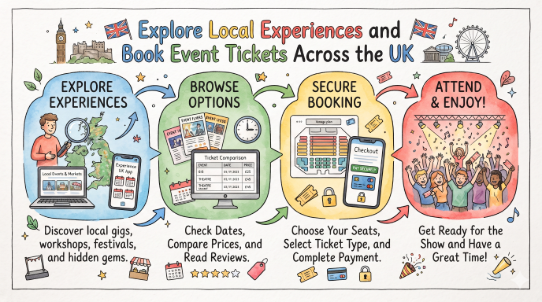
How the Booking Process Usually Works
Search for an event
Choose a category or location that matches your interests.
Review the listing
Read the event description and check the schedule.
Select a ticket
Choose a ticket category that suits your requirements.
Enter booking details
Provide the information requested by the platform.
Review your selection
Check the event, ticket type, and booking details.
Complete the process
Follow the platform’s payment and confirmation instructions.
Keep your booking information available for the event day.
Important Details to Check Before Payment
Review these points before completing your purchase:
- Ticket category
- Total listed price
- Event date and time
- Venue address
- Entry requirements
- Age restrictions
- Cancellation conditions
- Refund information
- Booking confirmation details
These checks help you understand the purchase.
Choosing Between Different Ticket Categories
Organisers may offer different ticket options for the same event.
Each option can suit a particular audience or access requirement.
| Ticket category | Typical use | What to review |
|---|---|---|
| General admission | Standard entry | Entry conditions |
| Early-bird ticket | Early purchase offer | Offer deadline |
| VIP ticket | Additional listed benefits | Included services |
| Group ticket | Multiple attendees | Group requirements |
| Student ticket | Eligible student entry | Proof requirements |
| Workshop ticket | Access to a learning session | Session details |
Not every event includes all these options. Always check the organiser’s actual ticket information.
Select Tickets Based on Your Requirements
Think about what you need from the event.
A standard ticket may provide the entry you want. A workshop ticket may give access to a specific learning activity.
Do not assume that a premium ticket includes every extra service. Read the ticket description carefully.
What to Look for in an Event Ticketing Platform UK
An Event Ticketing Platform UK helps organisers present event and ticket information online.
It also gives attendees a place to explore details before booking.
A useful platform should make the event journey clear.
Easy Event Discovery
Users should find relevant events through clear categories and search options.
A simple browsing experience helps people explore different activities.
Complete Event Information
Event listings should include useful details.
These may include the date, time, venue, event description, and organiser information.
Clear Ticket Conditions
Attendees need to understand each ticket category.
Organisers should explain entry rules and other important conditions.
Simple Navigation
People should find important information without unnecessary steps.
Clear menus and readable pages can improve the browsing experience.
Mobile-Friendly Access
Many people use smartphones to search for activities.
A mobile-friendly platform helps users review event information while travelling or planning their visit.
How Event Registration Software UK Supports Organisers
Event Registration Software UK helps organisers collect information from potential attendees.
It can support conferences, workshops, seminars, and community events.
The process should match the event’s requirements.
Common Registration Details
Organisers may request:
- Attendee name
- Contact information
- Registration category
- Organisation name
- Session preference
- Relevant attendance details
Organisers should collect only necessary information. They should explain why they need each detail.
Keep Registration Forms Simple
Long forms can discourage people from registering.
Use clear questions and short instructions. Avoid unnecessary fields.
After registration, share useful next steps. Attendees should understand what they need to do before arrival.
Prepare for Attendee Arrival
Organisers can review registration information before the event.
They may prepare attendee lists and entry instructions. Clear preparation can help reduce confusion at the venue.
How to List Your Event Online UK
Organisers need clear ways to introduce events to potential audiences.
List Your Event Online UK reflects this common requirement.
A complete listing helps people understand an event before making plans.
Collect the Main Event Details
Prepare the important information first.
Include:
- Event title
- Event category
- Date and time
- Venue or location
- Event description
- Organiser details
- Ticket information
- Registration instructions
Check every detail before submitting the listing.
Create a Description That Answers Key Questions
A good description explains the event’s purpose.
Tell readers what they can expect and who should attend.
For example, a business conference description should mention its main topics. A food festival description should explain its activities.
Keep the writing simple and informative.
Choose a Relevant Category
Select a category that matches the actual event.
A suitable category helps users find relevant activities. It also makes your listing easier to understand.
Review the Listing Before Publishing
Check the spelling, schedule, venue, and event description.
Make sure the information reflects your plans. Correct missing details before sharing the listing.
Selling Event Tickets Online in the UK
Sell Event Tickets Online UK describes the process of presenting event tickets through digital platforms.
Organisers should focus on clear ticket information and useful communication.
Create Suitable Ticket Options
Choose ticket categories that match your event.
Use simple names and explain what each category includes.
If different tickets offer different access, describe those differences clearly.
Explain Prices and Entry Conditions
Show the relevant ticket prices and conditions.
Tell buyers about deadlines, restrictions, and eligibility requirements.
Clear information helps people understand their options.
Reach People Who May Attend
Choose promotional channels that suit your event.
A professional conference may interest business communities. A family festival may attract local residents.
Keep promotional messages accurate and relevant.
Share Updates with Attendees
Event details can change during preparation.
Organisers should share important changes to schedules, venues, or entry instructions.
Timely communication helps attendees prepare.
Event Management Software UK and Better Planning
Event Management Software UK refers to digital tools that support event planning and coordination.
Organisers may handle many tasks before an event begins. These tasks can include scheduling, team coordination, registration, and communication.
The right tools depend on the event’s size and needs.
Planning and Scheduling
Organisers define the event’s purpose, audience, venue, and schedule.
They also plan resources and assign responsibilities.
Team Coordination
Different people may manage different event tasks.
Clear responsibilities help teams understand their work. They also reduce confusion during preparation.
Attendee Information
Organisers may need to review registration details and prepare attendee lists.
They should protect personal information and follow relevant privacy requirements.
Communication and Updates
Attendees need accurate information before arriving.
Organisers should share important instructions and schedule changes through suitable channels.
Reviewing Event Outcomes
After the event, organisers can review feedback and attendance information.
They can identify successful activities and areas that need improvement.
This process can help them prepare better future events.
How MyEventsNow UK Connects Organisers and Attendees
MyEventsNow UK focuses on event discovery, online ticket booking, registration, and event promotion across the United Kingdom.
The platform aims to connect event organisers, venues, businesses, service providers, and attendees through an online marketplace.
Visit myeventsnow.uk/ to explore the platform.
Helping Attendees Explore Activities
People can explore event categories that match their interests.
They may look for concerts, festivals, workshops, exhibitions, and professional gatherings.
Location-based discovery can also help people explore events across UK cities.
Helping Organisers Present Events
Organisers need a clear way to introduce their activities.
An online marketplace gives them another place to share event information with potential attendees.
Complete descriptions help users understand the event before making plans.
Connecting Venues and Businesses
Venues and businesses often support event activities.
They may host gatherings, work with organisers, or provide related services.
A shared marketplace can help these groups connect with people involved in events.
Practical Examples of Event Discovery and Booking
People use event platforms for different reasons. These examples show how online discovery can support everyday plans.
- A family in Birmingham: A family wants a weekend activity. They explore local exhibitions and community events before choosing a suitable option.
- A visitor in London: A visitor wants to attend a live concert. They compare event dates, venues, and ticket conditions before booking.
- A professional in Manchester: A professional searches for a business conference. They review the topics, schedule, and registration details.
- A workshop organiser in Bristol: An organiser wants more people to discover a creative session. They prepare a listing with clear information and registration instructions.
These situations highlight the value of accurate event information. It helps people make informed choices.
Comparing Event Platforms Before You Choose
Different platforms support different needs. Attendees and organisers should compare services before making a decision.
| Comparison factor | Attendee needs | Organiser needs |
|---|---|---|
| Event information | Clear descriptions and schedules | Complete listing details |
| Search options | Relevant categories and locations | Audience discovery opportunities |
| Ticket details | Clear prices and conditions | Suitable ticket presentation |
| Registration | Simple booking instructions | Useful attendee information |
| Communication | Event updates and organiser details | Ways to share important updates |
| Usability | Easy mobile browsing | Simple event management |
Questions Attendees Should Ask
- Can I find events by category?
- Does the listing show the full schedule?
- Can I understand the ticket conditions?
- Does the platform provide useful organiser details?
- Can I browse comfortably on my phone?
Questions Organisers Should Ask
- Can I present complete event information?
- Does the platform suit my event category?
- Can I explain ticket options clearly?
- Does its process match my registration needs?
- Do its terms suit my organisation?
Compare actual services instead of relying on general promises.
Common Mistakes That Can Affect Event Plans
Small mistakes can create unnecessary problems. Attendees and organisers should check important details early.
Ignoring the Event Description
A title may not explain the full experience. Read the description before booking.
Checking the Venue Too Late
A venue may require extra travel time. Check the address and transport options early.
Overlooking Ticket Conditions
Different ticket categories may offer different access. Review the details before purchasing.
Missing Registration Deadlines
Some events require advance registration. Check the deadline and complete the process on time.
Publishing Incomplete Listings
Organisers should include the main event information. Missing details can confuse potential attendees.
Forgetting to Share Event Changes
Organisers should communicate important changes. This helps attendees prepare and avoid unnecessary travel.
Frequently Asked Questions
1. How can I discover upcoming events in the UK?
Choose an event category and location that match your interests. Search for concerts, festivals, workshops, exhibitions, or business gatherings. Review the event descriptions and schedules. Compare suitable options before making plans. Online event platforms can help you explore activities across different UK cities.
2. How do I find Events Near Me?
Use a local search with your preferred event category. Try phrases such as nearby concerts, family activities, or weekend workshops. Check the venue address and travel options. Specific searches can help you discover activities that suit your interests and schedule.
3. What types of Events in London can I explore?
London offers concerts, theatre performances, exhibitions, workshops, conferences, and cultural gatherings. You can search by category and location. Review the event details before booking. Check the venue and schedule to plan your visit.
4. How does Online Event Ticket Booking UK work?
Choose an event and review its information. Select a suitable ticket category and follow the platform’s booking instructions. Enter the required details and review your selection. Complete the process according to the platform’s payment and confirmation steps.
5. What should I check before buying Concert Tickets UK?
Check the performer, event date, venue, and starting time. Review the ticket category and entry conditions. Read the cancellation and refund information. Confirm your booking details before completing the purchase.
6. What is an Event Ticketing Platform UK?
An event ticketing platform helps organisers present ticket information online. It also allows attendees to explore event details and available options. Services differ between platforms. Review the features and terms before choosing one.
7. Why do organisers use Event Registration Software UK?
Organisers use registration software to collect and manage attendee information. It can support workshops, conferences, seminars, and community events. A clear process helps attendees provide the required details. It also helps organisers prepare for the event.
8. How can I List Your Event Online UK?
Prepare your event title, description, date, time, venue, and organiser details. Choose a suitable category and add ticket or registration information. Review the listing before publishing. Accurate information helps potential attendees understand your event.
9. Can I Sell Event Tickets Online UK?
Yes. Organisers can use suitable online platforms to present event tickets. They should explain ticket categories, prices, and entry conditions. They should also review the platform’s terms. Clear information helps buyers understand their options.
10. What does Event Management Software UK help organisers manage?
Event management software can support planning, scheduling, registration, and communication. Different platforms offer different tools. Organisers should identify their requirements first. Then they can compare services and choose options that match their event.
11. How should I choose an event discovery platform?
Start with your main requirements. Attendees should compare event details, search options, and ticket information. Organisers should review listing, registration, and communication needs. Check the platform’s actual features and terms before making a decision.
12. How does MyEventsNow UK support event discovery?
MyEventsNow UK focuses on connecting organisers, venues, businesses, service providers, and attendees. It aims to support event discovery, ticket booking, registration, and promotion. People can explore the platform to learn more about event opportunities across the UK.
Conclusion
Finding the right event starts with knowing what you want to experience. The UK offers activities for entertainment, learning, business, and community life. Online platforms help people explore these choices and review useful details. They also give organisers another way to present their events. Check the venue, schedule, ticket conditions, and registration details before making plans. Organisers should focus on accurate listings and clear communication. These simple steps can improve the experience for everyone. Explore different event categories, compare suitable options, and choose an activity that fits your interests and schedule.
Leave a Reply